Echoes of Myth
A dark-fantasy Soulslike prototype in Unreal Engine 5, built around the relationship between combat commitment, movement and space.
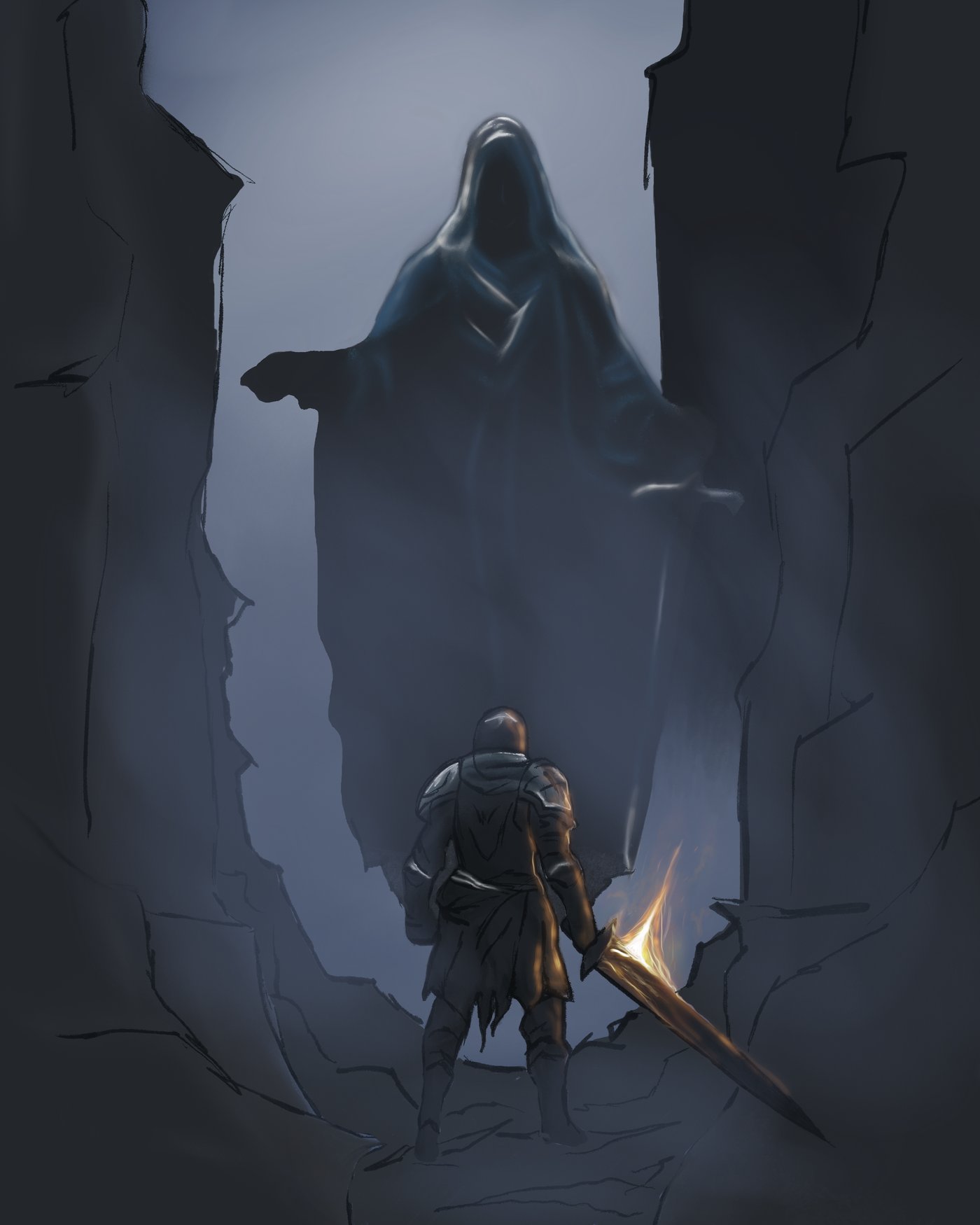
Echoes of Myth is a dark-fantasy Soulslike project developed in Unreal Engine 5, focused on translating the deliberate rhythm of Soulslike combat into a playable prototype and arena-based game experience.
The project explores the relationship between player movement, attack commitment, defensive timing, encounter space and progression — combining gameplay design with hands-on implementation inside the engine.
Soulslike gameplay, in this project, comes from how these ideas relate to each other — not from any one mechanic on its own.
- Light Attack
- A faster offensive action intended for more immediate attacks and lower commitment.
- Heavy Attack
- A more committed offensive option intended to create a stronger risk/reward decision than the light attack.
- Dodge Roll
- A defensive movement mechanic that allows the player to reposition and respond to threats, reinforcing timing and spatial awareness.
- Parry
- A second, more precise defensive option alongside the dodge roll — mapped as its own input rather than a variant of it.
- Target Lock
- Locks onto and releases a target, keeping the camera and attacks focused on one opponent during an encounter.
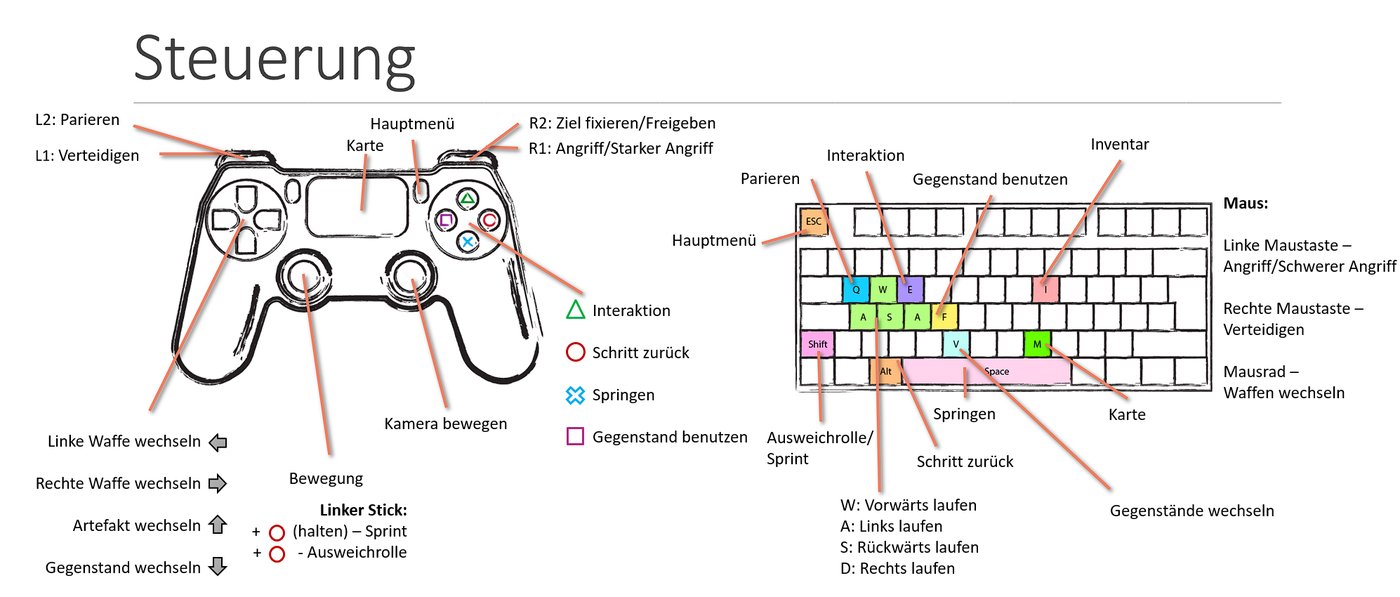
Mapped for both gamepad and keyboard/mouse from early on, separating attack, parry, dodge, target lock and item/weapon/artifact switching onto their own inputs rather than overloading a handful of buttons.
The important part isn't that the player can attack and dodge — it's how those choices are meant to work against each other.
- Light Attack
- → lower commitment, faster response
- Heavy Attack
- → higher commitment, greater risk
- Dodge
- → defensive timing, repositioning
- Parry
- → precise timing, punishes commitment
- Enemy Pressure
- → forces decision-making
- Arena Space
- → changes positioning and movement
The environment isn't just visual scenery — the arena layout is meant to shape movement, positioning, distance, and how readable a fight stays under pressure.
Encounter space is part of the combat design, not separate from it: where a fight happens changes what decisions are available inside it.
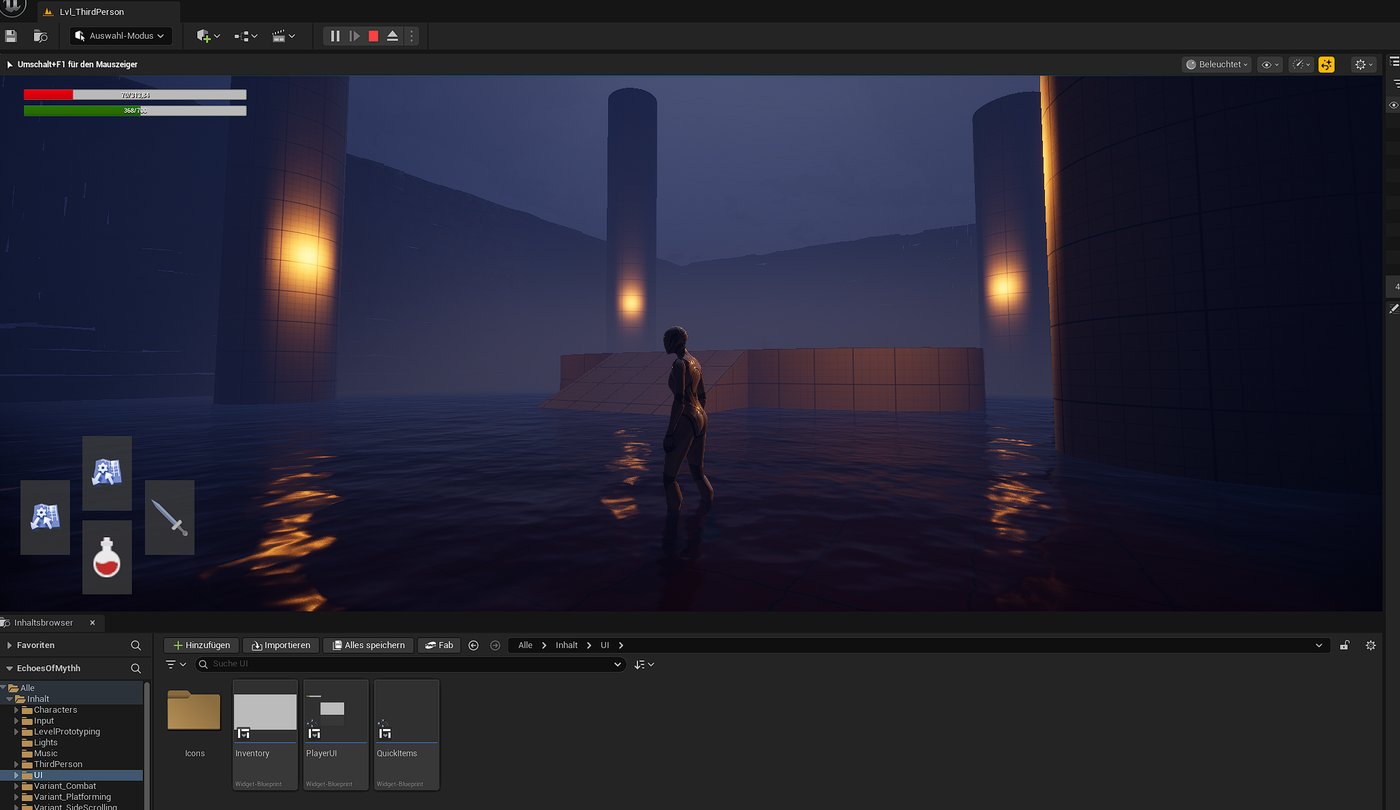
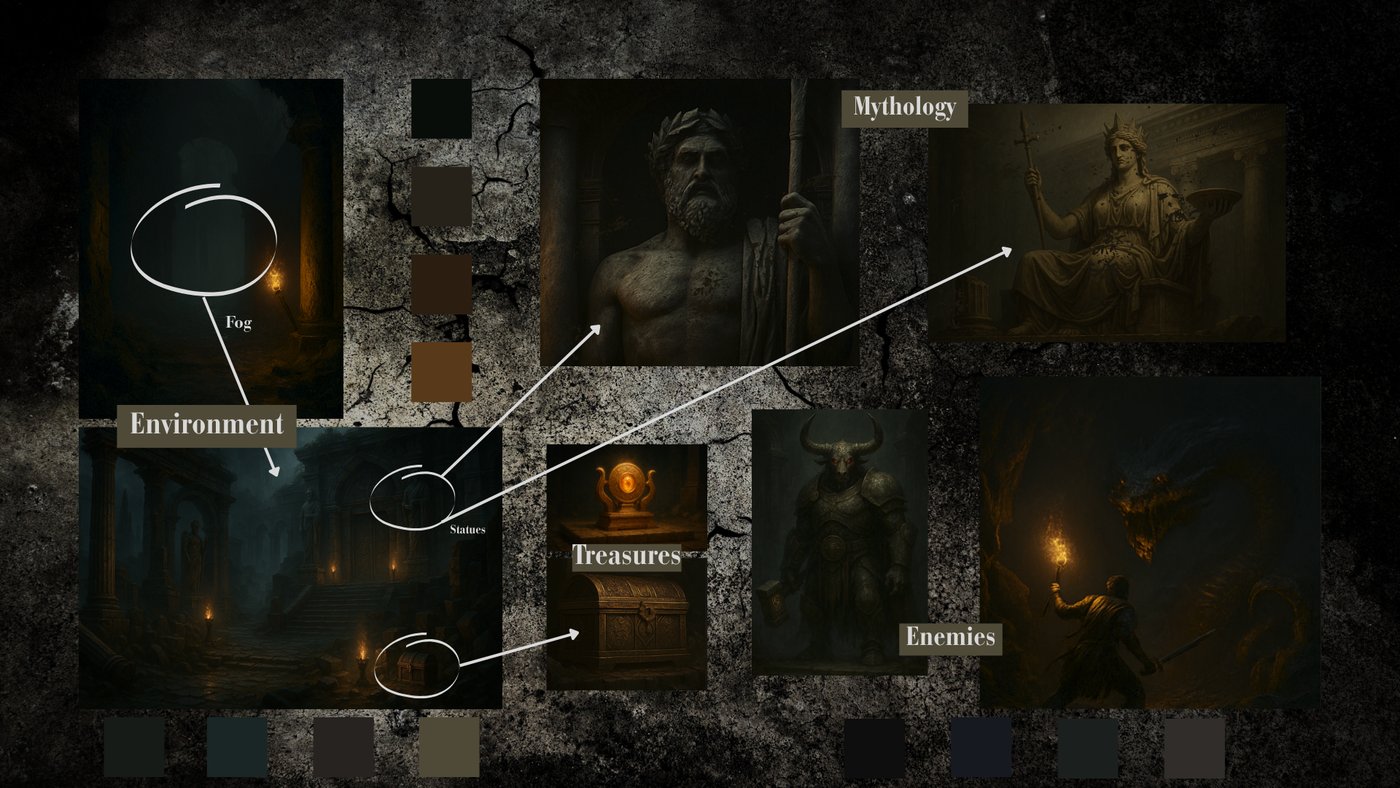
Built and prototyped directly inside Unreal Engine 5.
- Unreal Engine Workflow
- Blueprint Visual Scripting
- Gameplay Prototyping
- Player Mechanics
- Combat Prototyping
- Character Interaction
- Level Design
- Environment Assembly
- UI Implementation
- Lighting & Atmosphere
- Asset Integration
- Game Logic
- Debugging
- Iterative Development
Blueprint Visual Scripting was used to implement and prototype gameplay behaviour directly inside the engine — connecting player input, combat actions and reactions without leaving the editor.
The project's Blueprint structure separates concerns into dedicated folders — level prototyping, characters, input and UI among them — with the interface itself split into its own widget blueprints for the player HUD, inventory and quick-item bar.
The project also includes an artifact system, tied into player progression — the player can equip and switch between artifacts during play. The specific artifacts, their abilities and how progression works aren't detailed here yet.
- 01 / Concept
- Define the dark-fantasy Soulslike direction and intended player experience.
- 02 / Systems
- Define the core player mechanics and the relationships between attack, movement and defensive actions.
- 03 / Prototype
- Translate the gameplay concept into Unreal Engine 5.
- 04 / Space
- Develop the arena / level around player movement and gameplay requirements.
- 05 / Iterate
- Test mechanics, interaction and level behaviour, and refine the prototype.
Game design, gameplay design, gameplay prototyping, level design, and Unreal Engine implementation.
- 01
- Designing interconnected gameplay mechanics rather than isolated features.
- 02
- Translating game-design concepts into playable Unreal Engine prototypes.
- 03
- Working with Blueprint Visual Scripting and Unreal Engine workflows.
- 04
- Thinking about level space as part of gameplay and combat design.
- 05
- Designing within an established genre while making deliberate mechanical decisions.